

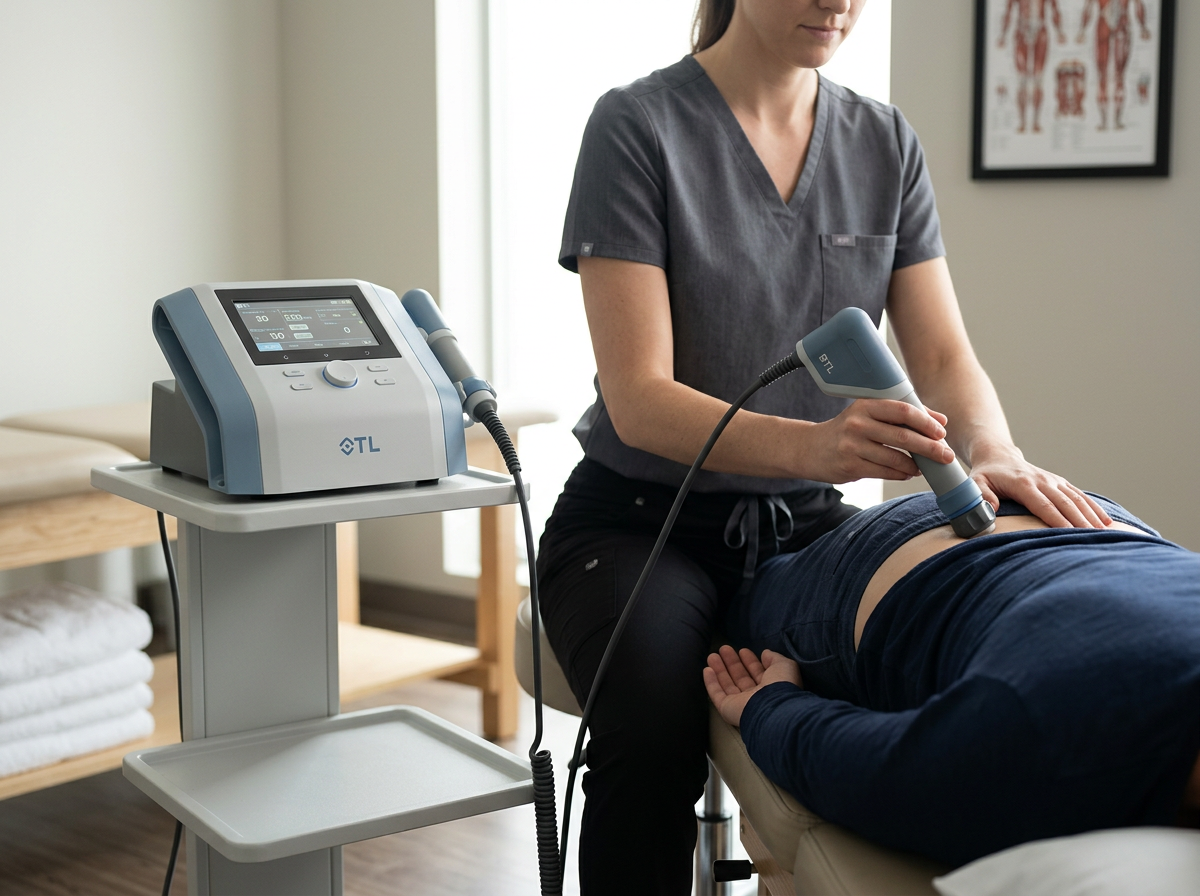
Extracorporeal Shockwave therapy
Acoustic pulses, aimed at the tissue that wont heal on its own.
Shockwave therapy delivers focused pressure waves to stubborn tendon and soft-tissue injuries - restarting the body’s repair process where rest and time alone haven’t worked.
energy, not medication
Shockwave therapy uses a handheld applicator to send short, high-energy acoustic pulses through the skin into injured tendon or soft tissue - no needles, no incisions, no anesthetic.
Those pulses create controlled micro-stress in tissue that has stopped healing on its own, often after months of chronic tendon pain. The body reads that stress as a signal to increase blood flow, break down disorganized scar tissue, and rebuild the area with new, healthier fibers.
It's one tool in a broader plan. At Station Street Health, shockwave is used alongside manual therapy, exercise rehab, and other treatment provided by our chiropractors and physiotherapists - not as a stand-alone fix.
Typically 3-6 session | ~1x per week | 0 downtime after
How it works
Three stages, one focal point.
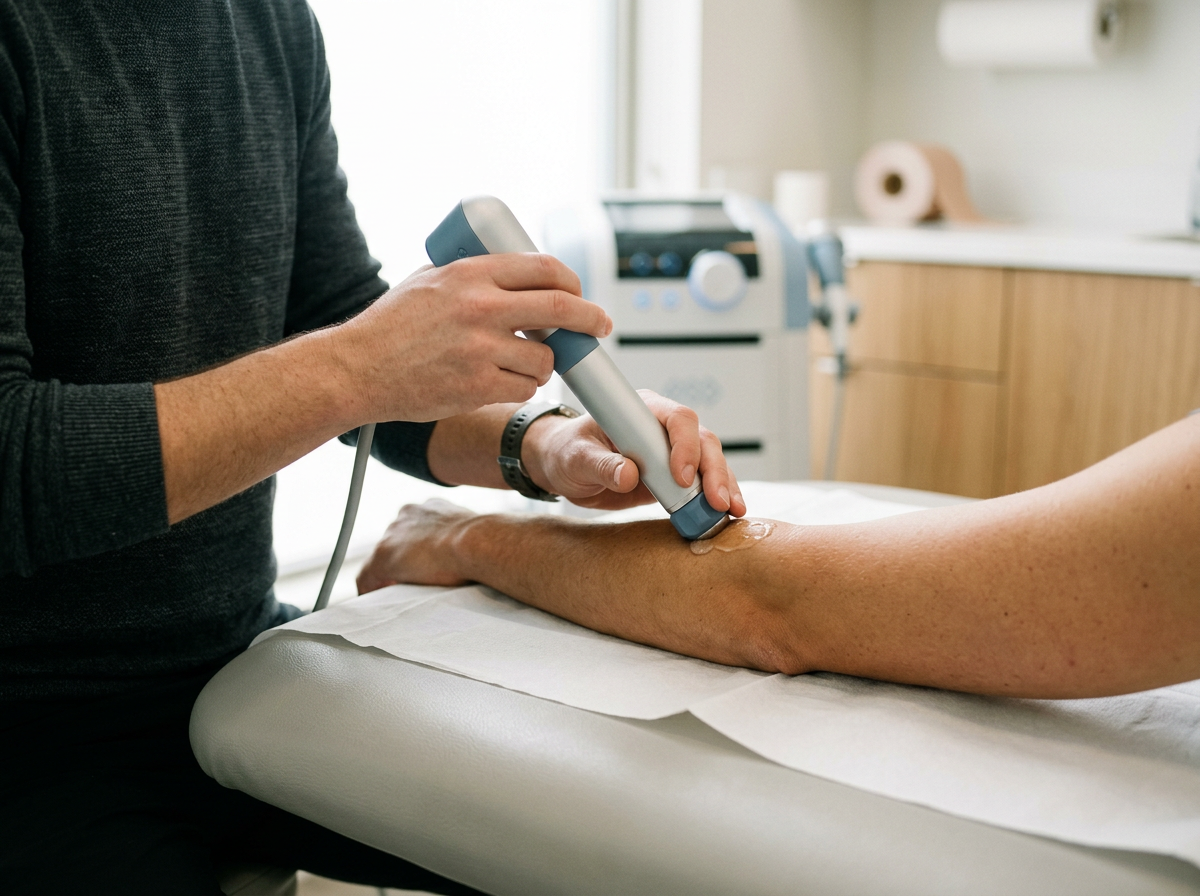
Every session follows the same underlying mechanism, from the moment the applicator touches skin to the weeks of remodelling that follow.
-
Focused Pulses
A handheld applicator directs acoustic pressure waves through the skin to the specific site of tendon or soft-tissue damage, guided by your provider's hands-on assessment.
-
Mechanotransduction
Cells at the site respond to the mechanical stimulus by increasing local blood flow, releasing growth factors, and clearing out disorganized, degenerated tissue.
-
Progressive Remodelling
Over the following days and weeks, the tissue rebuilds with better-organized collagen. Most people notice discomfort easing gradually across their course of sessions, not overnight.
Conditions we treat
chronic, stubborn, and slow to heal.
Shockwave tends to help most with tendon and soft-tissue conditions that have plateaued - pain that's been sitting at the same level for eight weeks or more despite rest, activity changes, or other therapy.
IT Band Syndrome
-
calcific rotator cuff
-
Tennis/ golfers elbow
-
proximal hamstring tendinopathy
-
myofascial trigger points
-
IT Band Syndrome - calcific rotator cuff - Tennis/ golfers elbow - proximal hamstring tendinopathy - myofascial trigger points -
Shockwave doesn’t work alone. Neither do we
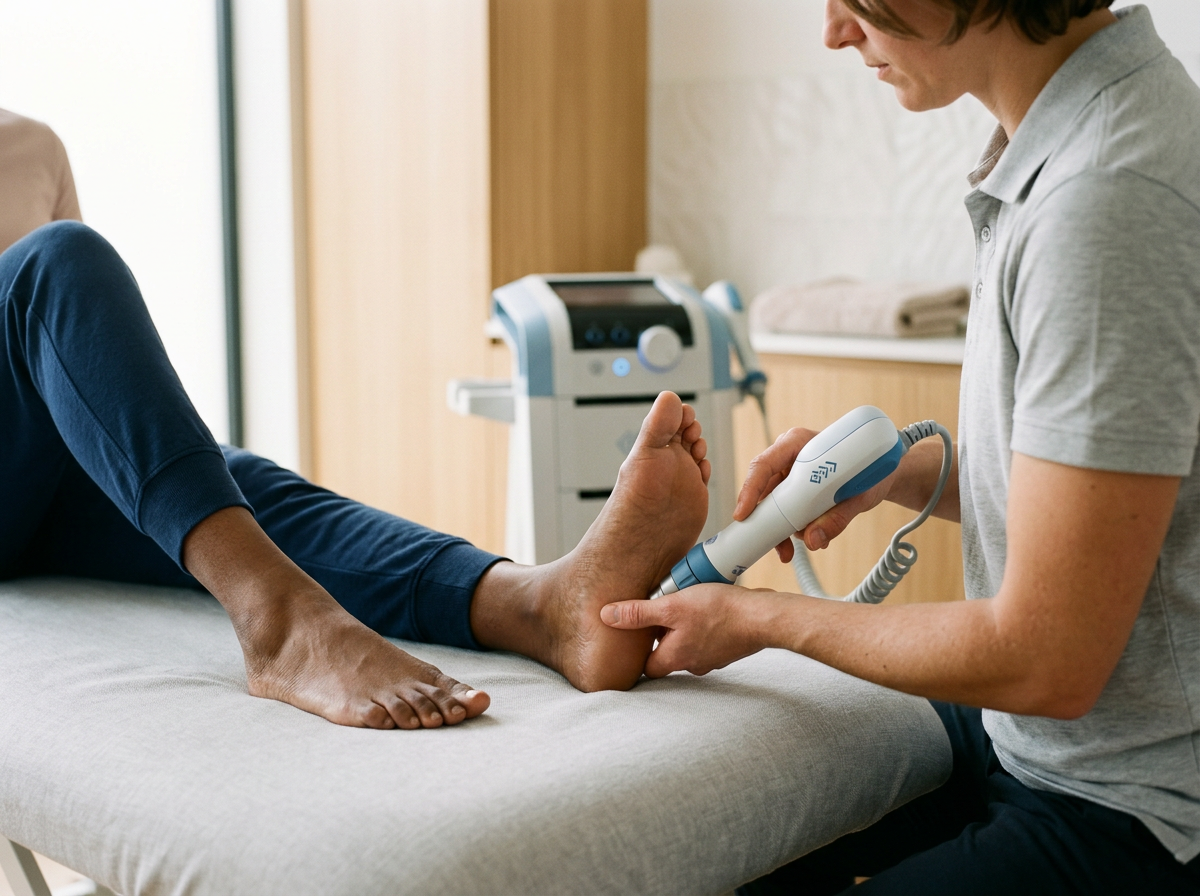
Shockwave is delivered by our regulated providers and built into a plan alongside the rest of what your recovery needs.
questions we hear often
Is shockwave therapy covered by insurance?When it's provided by a regulated chiropractor or physiotherapist as part of your visit, many extended health plans cover it the same way they cover the rest of that appointment. Coverage varies by plan, so it's worth checking your policy directly.
How soon will I notice a difference?Some people feel change after the first session; most need the full course before pain drops meaningfully. Tendon tissue remodels slowly - expect gradual, not overnight, results.
Do I need a referral?No referral is required to see our chiropractors or physiotherapists - you can book directly and they'll determine if shockwave fits your case.
Let’s see if shockwave fits.
Book a consult with one of our chiropractors or physiotherapists at Station Street Health, Saint John - they'll assess your injury and walk you through whether shockwave belongs in your plan.